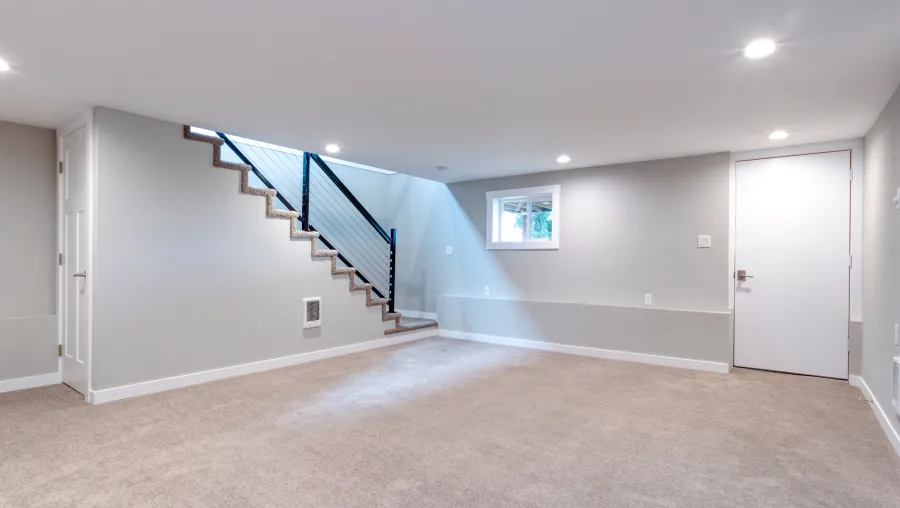
What Does Basement Finishing Cost in Northern Colorado?
Homeowners in Loveland, Fort Collins, and surrounding Northern Colorado communities typically spend between $45 and $85 per square foot to finish a basement. For a standard 1,000-square-foot basement, that translates to a project range of $45,000 to $85,000. These figures reflect current labor rates and material costs specific to the Front Range region, where skilled trades remain in steady demand and supply chains have stabilized following recent years of volatility.
The lower end of this range covers basic finishing: framing, drywall, standard electrical and plumbing rough-ins, basic flooring such as carpet or laminate, and builder-grade fixtures. The upper end includes premium materials, custom millwork, upgraded lighting and HVAC systems, and higher-end finishes such as engineered hardwood or luxury vinyl plank. Mid-range projects, which represent the majority of basement finishing work in Northern Colorado, typically fall between $55 and $65 per square foot and deliver a balanced mix of quality materials and functional design.
Labor accounts for roughly 40 to 50 percent of total project cost in this region. Licensed electricians, plumbers, and HVAC technicians in Larimer and Weld counties command competitive rates, and scheduling during peak construction months (April through October) can add lead time and occasionally modest premiums. Material costs vary by supplier and season, but local building supply yards in Loveland and Fort Collins offer consistent pricing on framing lumber, drywall, insulation, and flooring products. Homeowners who plan projects during the slower winter months sometimes secure more flexible scheduling and slightly better labor availability, though work on basements remains less weather-dependent than outdoor projects.
Understanding these cost fundamentals helps property owners set realistic budgets and avoid surprises. A qualified basement finishing contractor can provide a detailed estimate based on your specific space, finishes, and functional goals.
Key Variables That Drive Your Project Budget
Several project-specific factors determine where your basement finishing cost lands within the typical range. The first is the existing condition of the space. Basements that are dry, structurally sound, and free of major foundation issues require less preparatory work and can move directly into framing and finishing. Conversely, spaces with moisture intrusion, foundation cracks, or outdated electrical panels demand remediation before finishing begins. Colorado’s freeze-thaw cycles place seasonal stress on concrete foundations, and older homes in Loveland and Fort Collins occasionally require crack repair or perimeter drainage improvements before walls can be framed and insulated.
The level of finish you select has the most direct impact on cost. A basic finish includes standard drywall, carpet or laminate flooring, basic trim, and builder-grade fixtures. A mid-grade finish introduces higher-quality flooring options, upgraded lighting, better insulation for soundproofing, and semi-custom cabinetry if a wet bar or kitchenette is included. Luxury finishes incorporate custom millwork, stone countertops, high-end tile work, advanced home automation, and premium HVAC zoning. Each step up in finish quality adds both material cost and labor hours.
Local building codes and permit requirements also influence the budget. Larimer County and municipalities such as Loveland and Fort Collins enforce specific codes for egress windows, ceiling height, electrical service, and fire safety in finished basements. Adding or enlarging an egress window to meet code typically costs between $3,000 and $6,000, depending on excavation complexity and window type. Electrical panel upgrades, sometimes necessary to support additional circuits for lighting, outlets, and HVAC, add another $1,500 to $3,500.
Timeline matters. Projects scheduled during peak construction season may face longer lead times for inspections and trades, while off-season work often provides more scheduling flexibility. Working with an experienced basement remodeling contractor ensures that all code requirements are met and that the project stays on schedule and within budget.
Common Finishing Packages and What They Include
Most homeowners in Northern Colorado choose from three main finishing tiers, each delivering a different balance of cost, quality, and functionality. The basic finish, typically priced at $45 to $55 per square foot, includes essential structural and finish work. This package covers framing, insulation, drywall installation and finishing, basic electrical with code-compliant outlets and lighting, standard HVAC extensions, carpet or laminate flooring, and simple trim. The result is a clean, functional living space suitable for family rooms, home gyms, or children’s play areas. This option appeals to homeowners who prioritize usable square footage over high-end aesthetics and who plan to handle some cosmetic upgrades themselves over time.
The mid-grade finish, ranging from $55 to $70 per square foot, represents the most popular choice among Loveland and Fort Collins homeowners. It adds quality materials and thoughtful design elements without entering luxury territory. Mid-grade projects typically feature upgraded flooring such as luxury vinyl plank or engineered hardwood, enhanced lighting with dimmable recessed cans and decorative fixtures, higher-grade paint and trim, semi-custom built-ins or shelving, upgraded HVAC with individual zone control, and code-compliant egress windows sized for safety and natural light. Many mid-grade projects also include a wet bar or kitchenette with stock cabinetry, laminate or quartz countertops, and a small sink, transforming the basement into an entertainment hub that adds real lifestyle value.
Luxury finishes, starting at $70 per square foot and climbing past $85 depending on scope, deliver custom design and premium materials throughout. These projects feature hardwood or high-end tile flooring, custom cabinetry and millwork, stone or quartz countertops, designer lighting and fixtures, advanced home automation for lighting and climate, dedicated home theater or wine cellar construction, and spa-quality bathrooms with frameless glass showers and heated floors. Luxury basements in Northern Colorado often incorporate mountain-modern or contemporary design themes that reflect regional aesthetics and maximize natural light through oversized egress windows and window wells.
Choosing the right package depends on your goals, budget, and how you plan to use the space. A professional basement finishing contractor can walk you through options and help you prioritize features that deliver the best return on your investment.
Anticipating Permits, Inspections, and Unforeseen Expenses
Basement finishing projects involve costs beyond the obvious line items for framing, drywall, and flooring. Permitting and inspections are required in Loveland, Fort Collins, and most Northern Colorado municipalities, and fees vary by jurisdiction and project scope. A typical basement finishing permit costs between $500 and $1,200, depending on square footage and the number of trade inspections required. Plan review, electrical, plumbing, mechanical, and final occupancy inspections each add time and coordination, and projects must pass each checkpoint before moving forward. Working with a licensed contractor familiar with local building departments streamlines this process and reduces the risk of failed inspections that delay completion.
Structural surprises are common in older homes. Foundation cracks, moisture issues, outdated wiring, and inadequate HVAC capacity often surface once walls are opened. Addressing these issues before finishing work begins prevents costly callbacks and ensures long-term performance. In Northern Colorado, where temperature swings and soil conditions place stress on foundations, budget 10 to 15 percent of your total project cost as a contingency for unforeseen conditions. This reserve covers items such as foundation waterproofing, radon mitigation (common in Colorado basements), electrical panel upgrades, and HVAC system extensions or replacements.
Egress windows, required by code for any basement bedroom or living space, represent another budget consideration. Installation involves excavation, cutting the foundation, framing the opening, installing the window and well, and backfilling and grading. Costs range from $3,000 to $6,000 per window, depending on soil conditions, depth, and window size. Homes with high water tables or clay soils may require additional drainage measures, adding to the expense.
Utility extensions often exceed initial estimates. Running new plumbing for a bathroom or wet bar involves not only the visible fixtures but also drain lines, vent stacks, and supply lines routed through floor joists and walls. Electrical work may require new circuits, upgraded panels, or relocated service entries. HVAC extensions demand proper duct sizing, airflow balancing, and sometimes a second furnace or mini-split system to maintain comfort year-round in Colorado’s climate.
Transparent communication with your contractor about these potential costs before the project begins protects both parties and keeps the project on track. A detailed estimate from a trusted general contractor accounts for these variables and sets realistic expectations from day one.
Does Finishing Your Basement Add Resale Value?
Finishing a basement adds functional living space and typically increases your home’s resale value, though the exact return depends on the quality of the work, local market conditions, and how the space is used. In Northern Colorado’s competitive real estate market, finished basements are a significant selling point. Buyers in Loveland, Fort Collins, and surrounding areas actively seek homes with additional bedrooms, bathrooms, and flexible living areas, particularly as housing prices remain elevated and inventory stays limited. A well-finished basement can differentiate your property and shorten time on market.
National data suggests homeowners recoup between 70 and 75 percent of basement finishing costs at resale, but regional factors influence this figure. In markets with strong demand for turnkey homes and limited new construction, such as Northern Colorado, returns can approach or exceed 80 percent for mid-grade finishes that include desirable features like additional bedrooms, full bathrooms, wet bars, and ample storage. Luxury finishes with high-end materials and custom features may recoup a lower percentage, as they reflect personal taste and exceed the expectations of most buyers in the price range.
Functional improvements deliver the strongest returns. Adding a conforming bedroom with egress window, a full bathroom, and a multi-use family or recreation room appeals to the broadest buyer pool and justifies a higher asking price. Basements designed for aging-in-place, with accessible bathrooms and barrier-free layouts, attract buyers planning for long-term occupancy. Home offices with dedicated electrical circuits and quality lighting have become increasingly valuable as remote work remains common in professional sectors throughout Northern Colorado.
Beyond resale, basement finishing delivers immediate quality-of-life benefits. Families gain space for children’s activities, hobbies, exercise, and entertaining without the cost and permitting complexity of an above-grade addition. Homeowners who plan to stay in their property for five or more years often prioritize livability over resale math, viewing the investment as an enhancement to daily life rather than a purely financial calculation.
If you are considering basement finishing to add value or improve your living space, consulting with a knowledgeable home addition contractor ensures the project aligns with your goals and delivers results that serve both immediate needs and long-term value.